Best Space Saving Room Divider for Small Spaces

Five room dividers ranked for tight rooms, studios and rentals: track-mounted accordions, no-drill curtain rods, folding panels, and one freestanding fabric screen.

By Jadiel FranklinUpdated 14 min read
On this page
- Best space saving room divider for small spaces at a glance
- How the shortlist was built
- 1. JILRON Accordion Partition Curtain with Ceiling Track — Best overall
- 2. Room Divider for Room Separation by Daurore paw — Best minimal setup
- 3. SUNALLY Room Divider for Separation 28-114in — Most versatile
- 4. SUNALLY Room Divider Privacy Screens — Best upgrade
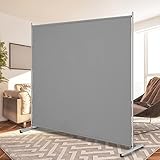
- 5. RANTILA Single Large Panel Room Divider — Best budget pick
- Ceiling track, tension rod or freestanding: what actually saves floor space?
- Can renters install any of these without losing a deposit?
- What the listings do not tell you about small-room dividers
- How to measure before you buy
- The verdict
- FAQ
The best space saving room divider for small spaces is the JILRON Accordion Partition Curtain, a ceiling-tracked fabric wall that weighs 6.37 lb and folds flat against 118 inches of curved rail when you are not using it. If you cannot drill overhead, the Daurore paw no-drill rod stretches from 28 to 140 inches wide and pressure-fits between floor and ceiling with no anchors at all. The word "small" is doing a lot of work in this category, so read the picks against your actual footprint before ordering.
Best space saving room divider for small spaces at a glance
| Pick | Type | Max span | Price |
|---|---|---|---|
Best overall JILRON Accordion Partition Curtain |
Ceiling-track fabric | 100"w × 84"l panel 118" curved rail |
Check Price |
Best minimal setup Daurore paw Room Divider Rod |
No-drill tension rod | 28–140"w 48–120"h |
Check Price |
Most versatile SUNALLY 28–114in Divider Rod |
No-drill tension rod | 28–114"w 4–10 ft h |
Check Price |
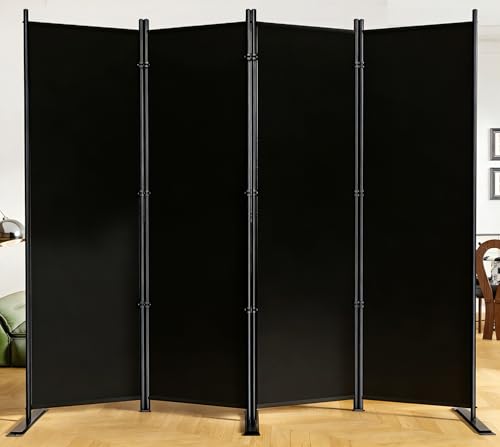
Best upgrade SUNALLY 4-Panel Privacy Screen |
Folding freestanding | 71.3"w × 88"h 4 panels |
Check Price |
Best budget pick RANTILA Single Panel Divider |
Freestanding fabric | 71"w × 69.5"h 1 panel |
Check Price |


How the shortlist was built
Five picks made this list because they map to five different rooms. That was the whole point.
I started with the dividers most people compare in this category: freestanding folding screens, curtain rods, ceiling tracks and single-panel screens. Then I sorted them by the buyer they suit, not by feature count. A studio with 10-foot ceilings and rented walls is not the same room as a shared bedroom with a corner desk, and a divider that solves one usually fails the other.
Three profiles drove the picks:
- Renters who cannot damage walls at all. They get the two no-drill tension rods and the two freestanding options.
- Owners or long-term tenants with permission to drill the ceiling. They get the accordion track, which is the only fixed installation in the set.
- Anyone who needs the divider to disappear when it is not in use. That knocks out the freestanding screens, because they still occupy floor even when folded.
I cut anything that pretended to be small-space friendly but shipped in permanent freestanding form heavier than 15 lb. Two SUNALLY products made the list, because one is a rod and one is a folded screen, and they solve different problems.
1. JILRON Accordion Partition Curtain with Ceiling Track — Best overall
A track-mounted fabric wall that folds flat and reclaims almost all of its footprint when open, which is why it wins for the best space saving room divider for small spaces.
Best for: renters who own the ceiling and want a soft wall they can pull across at night Skip it if: you cannot drill into the ceiling at all
Nothing else in this set gets out of the way as completely. The panel measures 100 inches wide by 84 inches long, weighs 6.37 lb, and rides a 118-inch curved track that JILRON says you can shape to your room's layout. Because the mounting point is overhead, the divider takes no floor space when open and only the panel's thickness when closed. Every other pick sits on the floor either always or when in use.
JILRON also claims 100% blackout fabric, which for a bedroom split off a studio is the difference between sleeping and not. The installation kit includes anchors and screws for a ceiling attachment, so this is the one pick that does need a drill and a stud finder. It is the most expensive pick here, and it is the slowest seller of the five, which reads as a niche buyer rather than a weak product: the people who need a ceiling-tracked blackout curtain really need it, and everyone else picks a rod.
Pros:
- Zero floor footprint when open
- 100% blackout claim for sleep zones
- 118-inch curved track shapes to room layout
- Panel weighs only 6.37 lb
- Full anchor and screw kit included
Cons:
- Requires drilling into the ceiling
- Most expensive pick in this set
- Off-white only
- Fixed panel size at 100 × 84 in
2. Room Divider for Room Separation by Daurore paw — Best minimal setup
A no-drill tension rod that stretches from 28 to 140 inches wide and 48 to 120 inches tall, giving the widest span in the set without a single hole.

Best for: studios where the divider has to span a wide opening without touching the walls Skip it if: you want the divider itself, not just the rod
This one is the widest-spanning pick here. Daurore paw lists an adjustable width from 28 to 140 inches and a height range from 48 to 120 inches, which covers almost every domestic ceiling. It weighs 10.9 lb and packs down to a bundle of stainless steel poles. The listing is explicit that curtains are not included, so budget for a panel too.
The trick with these tension systems is that they pressure-fit between the floor and the ceiling, which the listing calls a no-drill design that keeps walls and ceilings damage-free. In practice you get one long vertical pole plus a horizontal rod, and the curtain of your choice slides on. For a small space this beats a freestanding screen because the rod's floor footprint is a single pole base, not a zigzag of panels. Only one seller lists it, which limits fallback if there is a shipping issue.
Pros:
- 28 to 140 in adjustable width, widest in this set
- 4 to 10 ft adjustable height
- No drilling into walls or ceiling
- Stainless steel poles, listed as rust-proof
- 10.9 lb total, easy to reposition
Cons:
- Curtain not included
- Only one seller stocks it
- Tension fit relies on level floor and ceiling
- Colour limited to black
3. SUNALLY Room Divider for Separation 28-114in — Most versatile
The shorter sibling of the Daurore rod, easier to handle in a small alcove and stocked by more sellers.

Best for: narrow alcoves and short runs where a lighter, shorter rod is easier to handle Skip it if: you need to span more than 114 inches
If your opening is under 114 inches, this is the rod I would start with. SUNALLY lists an adjustable width from 28 to 114 inches and a height from 4 to 10 ft, so it covers most bedroom doorways, closet reveals and studio nooks without the extra hardware you carry in the wider Daurore. The rod weighs 11.7 lb and uses the same no-drill approach: stainless steel poles wedged between floor and ceiling with no anchors.
Three sellers list it, more than any other pick here, which matters when a shipment is missing a coupler or an end cap. SUNALLY also calls out that curtains are not included, which is worth repeating because half the frustration with these systems is buying the rod and realising the fabric was a separate order. Set against the Daurore, the trade-off is 26 fewer inches of maximum width in exchange for a slightly heavier rod that sits mid-range for price and has more sellers behind it.
Pros:
- Adjustable 28 to 114 in width
- 4 to 10 ft height range
- Three sellers listed, best availability here
- No wall or ceiling holes
- Solid stainless steel construction
Cons:
- Narrower maximum span than the Daurore
- Weighs 11.7 lb, heaviest of the two rods
- Curtain sold separately
- Assembly involves adding or removing poles to fit
4. SUNALLY Room Divider Privacy Screens — Best upgrade
A four-panel folding screen with a reinforced steel frame and non-see-through fabric, for the buyer who wants a piece of furniture rather than a curtain.
Best for: a corner desk in a shared bedroom that needs a real visual block Skip it if: the divider has to move every day
This is the pick for people who want the divider to look like it belongs in the room. It stands 88 inches tall and spans 71.3 inches when the four panels are angled, with SUNALLY describing a reinforced steel frame, a powder-coated finish, and high-density polyester with a PA coating for a non-see-through screen. The multi-buckle hinges are listed as adjustable to any angle, which is how it stays upright without any attachment to floor, walls or ceiling.
The trade-off in a small space is honest. A folding screen always occupies some floor, and when you fold it flat you still have to store 71 inches of panel somewhere. But the visual weight is higher than a curtain rod's, and for a static setup like a video call background or a permanent bedroom-to-office split, that pays off. It sits in the premium price band, second only to the JILRON, and it is the second-slowest seller here.
Pros:
- 88 in tall, tallest freestanding option
- Non-see-through fabric with PA coating claimed
- Steel frame with powder-coated finish
- Angles freely on multi-buckle hinges
- No installation into walls or ceiling
Cons:
- Always occupies floor space
- Awkward to store flat when not in use
- Second-most expensive pick here
- Slow seller in this category
5. RANTILA Single Large Panel Room Divider — Best budget pick
One large fabric panel on a steel frame, cheapest in the set and the lightest way to hide a desk corner.

Best for: a home office corner in a rental where nothing can touch the walls Skip it if: you need to hide a bed or a full sleeping zone
The RANTILA is the cheapest of the five and the shortest, at 71 inches wide by 69.5 inches tall in a single panel. RANTILA lists a steel frame with UV-protected, waterproof fabric that wipes clean, and calls it lightweight enough to move and store without much effort. For a rented apartment where the goal is a video-call backdrop or a desk-shielding partition, that is the whole job.
What it will not do is block a bedroom. At 69.5 inches tall it sits below most adult sightlines when standing, and a single panel gives no depth, so it cannot wrap a bed the way a four-panel screen or a curtain track can. The listing does not publish a weight figure, which is the one gap in an otherwise clear spec sheet. As a starter divider it is the pick to buy first, learn what you actually need from a divider, and then either keep or upgrade.
Pros:
- Cheapest of the five picks
- Single panel is easy to carry and store
- Steel frame with UV and waterproof fabric claim
- Two sellers list it
- No installation required
Cons:
- Only 69.5 in tall, below standing sightline
- Single panel offers no wrap or angle
- No published weight figure
- Grey only
Ceiling track, tension rod or freestanding: what actually saves floor space?
The obvious specification to compare is height. It is not what decides this.
The real deciding criterion is how much floor the divider steals when it is open. A four-panel screen zigzagged out for privacy occupies a strip roughly 30 to 40 inches deep across its whole length. A tension rod occupies two small pole bases, and the curtain gathers to one end. A ceiling track occupies nothing on the floor at all. In a room where 10 square feet matters, that is the difference.
- Ceiling track (JILRON): zero floor use open or closed. Requires ceiling drilling.
- Tension rod (Daurore, SUNALLY 28–114): two small pole footprints. No drilling.
- Four-panel folding (SUNALLY 4-panel): biggest floor footprint. No installation.
- Single freestanding (RANTILA): small footprint, but the frame's feet stick out both sides.
The height numbers matter too, but only after you have picked the right mounting type. A 120-inch tension rod is useless in a room with 92-inch ceilings, and an 88-inch folding screen will not hide a loft bed. Match the mount to the space first, then the height.
Can renters install any of these without losing a deposit?
Four of the five picks are renter-safe. That is why the shortlist looks the way it does.
The two tension rods, the four-panel folding screen and the single freestanding panel all install with no drilling and no permanent hardware. The Daurore and SUNALLY rods use pressure between the floor and the ceiling, which SUNALLY describes as an ideal solution for hard-to-install areas such as rental homes. The two screens simply stand up.
The exception is the JILRON accordion track. It ships with anchors and screws, and the 118-inch curved rail attaches to the ceiling. Most leases treat small ceiling holes the same as any other wall damage, so check the terms before you drill. If your lease forbids ceiling penetration entirely, drop to the Daurore rod and pair it with a blackout curtain of your choice.
What the listings do not tell you about small-room dividers
Two things are missing from every product page in this category, and both of them will change what you buy.
- Curtain compatibility on rods. Both no-drill rods explicitly note that curtains are not included, but neither lists the pocket size a curtain needs. If you already own grommet-top curtains, measure the grommet inner diameter before ordering: standard curtain rods are usually 1 to 1.5 inches thick, and these stainless rods are on the thicker side.
- Ceiling height tolerance. Tension systems need a firm ceiling and a level floor. Popcorn ceilings, dropped tiles and heavily sloped floors all reduce grip. The listings advertise a maximum height, but they do not tell you the minimum surface area of pressure needed, and that is where most complaints in this category come from.
The other blind spot is fabric weight. A blackout curtain paired with a tension rod can weigh several pounds once it is hung, and the rod's load-bearing figure is not published. Start with a lighter mid-weight curtain and go heavier only if the rod holds.
How to measure before you buy
Small-space buyers overspend by ordering the wrong span. Measure first.
- Measure your ceiling height in three spots along the intended line of the divider. Use the lowest reading.
- Measure the width of the opening at both the floor and the ceiling. Use the wider reading for tension rods, the narrower one for a track.
- Add 4 inches to the ceiling height for tension rods to account for the compression range.
- For a folding screen, measure the depth the panels will occupy when angled: expect 25 to 35 inches for a four-panel setup.
- Note whether the floor is carpet, tile or hardwood. Tension rods grip hardwood and tile better than deep carpet.
Only after all five numbers are on paper should you pick the mount type. In small rooms, a 6-inch error is the difference between a divider that works and one that goes back in the box.
The verdict
If your ceiling is yours to drill and you want a divider that vanishes when open, the JILRON Accordion Partition Curtain is the pick. It weighs 6.37 lb, blocks light fully by JILRON's claim, and its 100-inch panel folds flat along a 118-inch curved track that takes no floor space at all. The cutoff is your lease and your ceiling: if you can put anchors overhead, this is the answer for the best space saving room divider for small spaces.
If you cannot drill, the Daurore paw no-drill rod is the runner-up, and the gap is smaller than the price suggests. Its 28 to 140-inch width range covers the widest openings in this set, it installs with pressure alone, and pairing it with a blackout curtain of your choice replicates most of the JILRON's function. The trade-off is two small pole footprints on the floor and the extra decision of picking the fabric yourself. Below those two, the SUNALLY 28–114 rod is the pick for shorter spans with more sellers behind it, the SUNALLY four-panel screen is the pick when you want a real piece of furniture, and the RANTILA is the pick to try first if the whole idea is new.
FAQ
Which is the best space saving room divider for small spaces overall?
Best space saving room divider for small spaces here is the JILRON Accordion Partition Curtain, because it is the only one that reclaims its footprint completely when open. The 100 × 84-inch panel folds along a 118-inch ceiling track and weighs 6.37 lb. Every other pick occupies at least some floor space either always, in the case of screens, or at the pole bases, in the case of rods.
Is a ceiling-track divider worth it over a tension rod?
A ceiling-track divider is worth it when three conditions align: you can drill overhead, you need full blackout for sleep, and you cannot spare any floor space at all. The JILRON meets all three at its price. If any one of those fails, a tension rod like the Daurore paw does 80% of the same job for less, with no holes and a curtain you pick separately.
How wide an opening can the Daurore paw rod actually cover?
The Daurore paw rod covers openings from 28 to 140 inches wide and 48 to 120 inches tall, which is the widest span in this set. That range covers almost every studio doorway, closet reveal and short room split you are likely to encounter. Just remember the curtain is a separate purchase, and the listing does not publish a maximum fabric weight, so start with a mid-weight panel.
SUNALLY 28-114 rod versus Daurore paw rod: which one?
The SUNALLY 28-114 rod versus Daurore is a span-versus-availability call. Pick the SUNALLY if your opening is under 114 inches wide and you want the reassurance of three sellers stocking it. Pick the Daurore if you need to span up to 140 inches, or if you want a slightly lighter build at 10.9 lb against the SUNALLY's 11.7 lb. Both are no-drill stainless steel systems.
What is the biggest mistake buyers make in this category?
The biggest mistake buyers make is treating "small spaces" as one problem. A studio with 10-foot ceilings, a shared bedroom with a corner desk and a rented alcove all need different solutions, and the same folding screen will fail in two of them. Measure the ceiling, the width and the floor type before ordering, and match the mount type to the room before you look at price.
Start with the ceiling. If it is yours to work with and you value floor space above all else, order the JILRON, drill once, and stop thinking about dividers. If the ceiling is not yours to touch, drop to the Daurore rod, add a curtain you already like the look of, and you get most of the same benefit with a screwdriver instead of a drill. The other three picks are for specific rooms rather than a general answer: a folding screen when the divider is the furniture, a shorter rod when the span is short, a single panel when the job is a video-call backdrop. Pick the mount before the model, and the model gets easy.